Recording Historic Structures
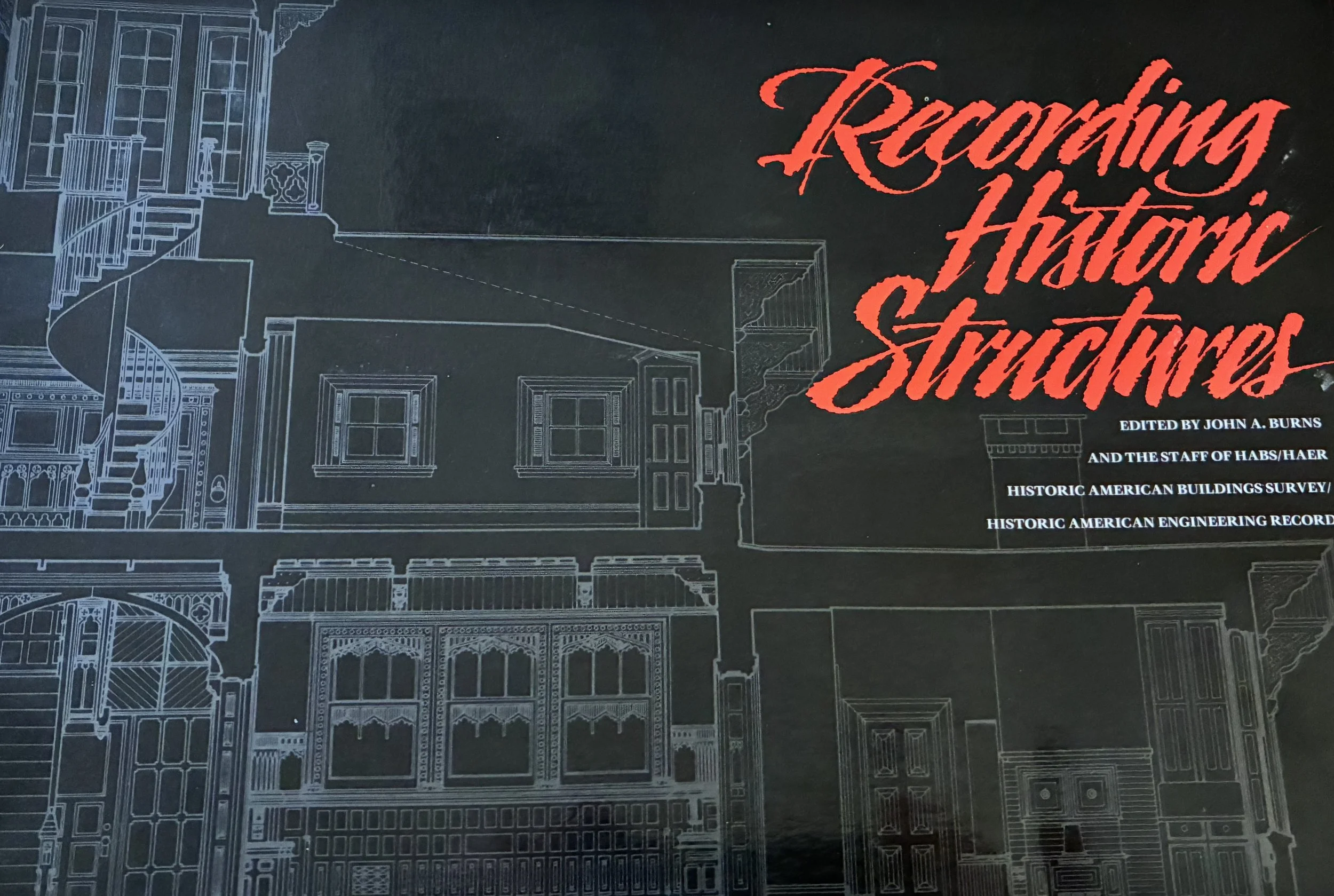
Author: The Staff of HABS/HAER National Park Service, US Department of the Interior, Edited by John Burns. First published in 1989, Second Edition published in 2003.
The original “Forward” by Charles E. Peterson provides a brief overview of how the Historic American Building Survey (HABS) came to be. The book is an excellent resource for the creation of Historic Structures Reports, which are frequently required when historically significant structures are scheduled for demolition. It delves into all aspects of recording the significance of the structure.
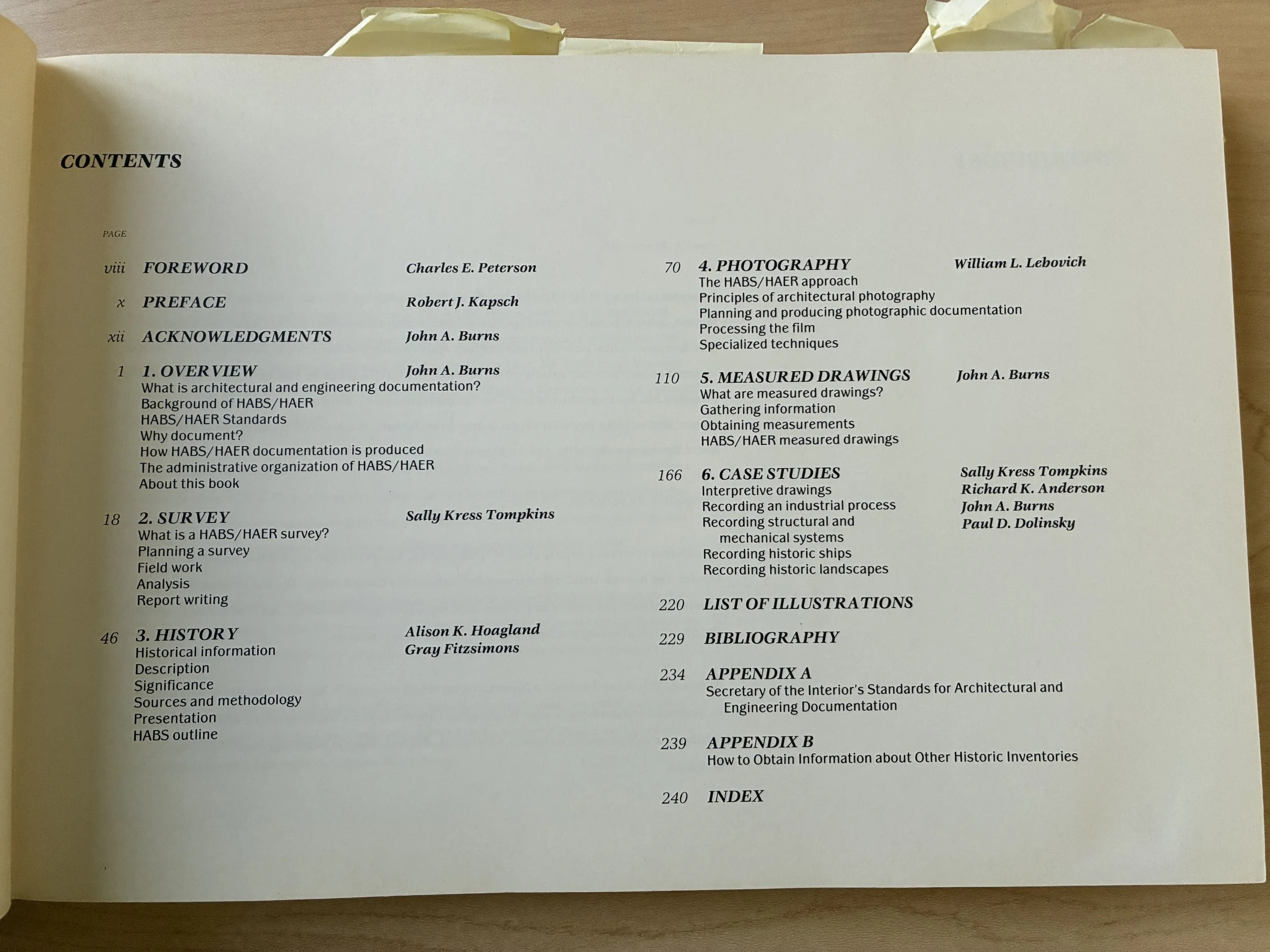
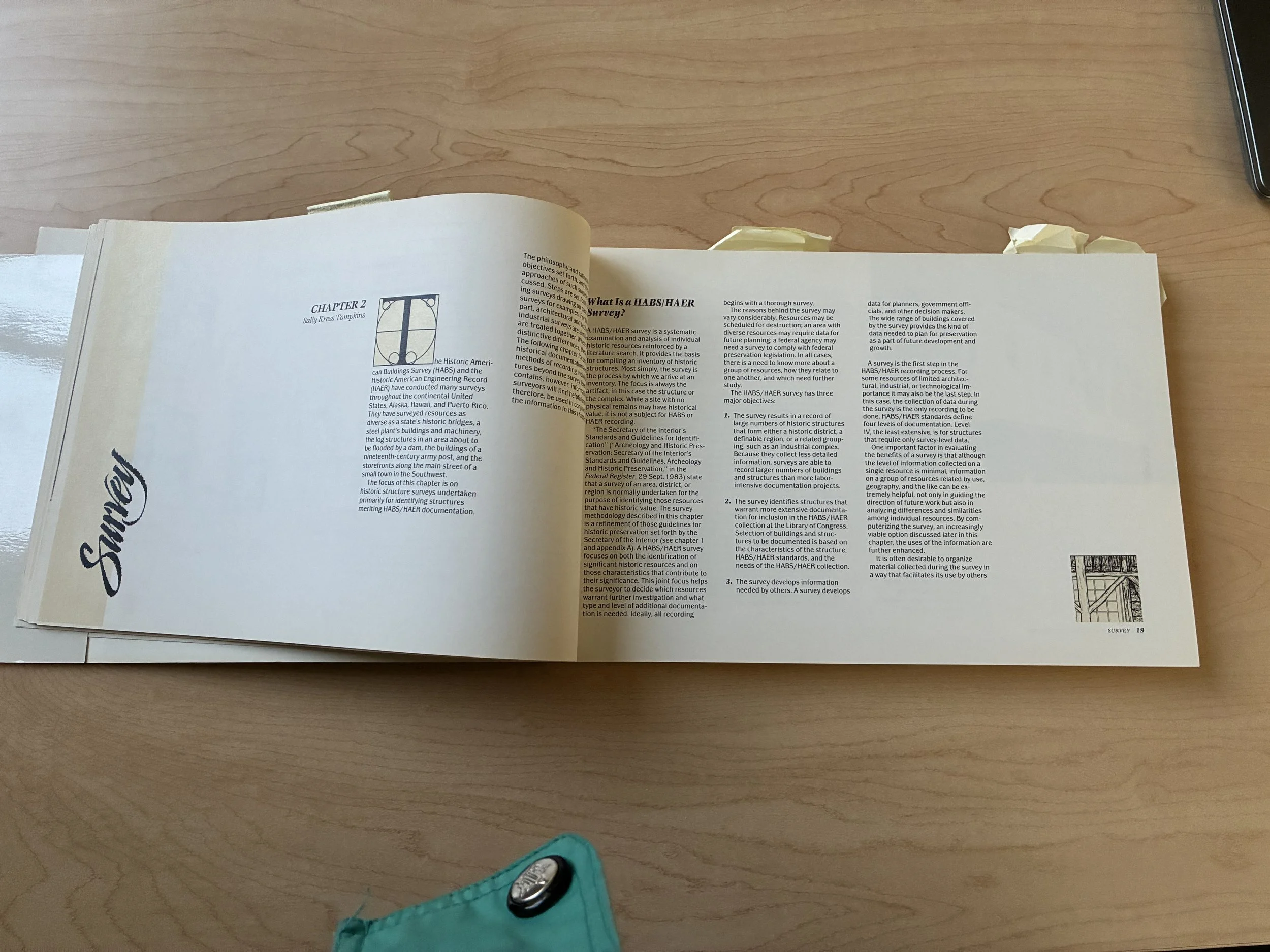
A full chapter is dedicated to preparing to conduct a survey, and another focused on collecting and verifying the structure’s contribution to history.
Photography is yet another chapter and while photographic equipment has changed significantly since the book was originally published, there are still valuable pointers in the variety of photos necessary for complete documentation as well as guidance for the composition of each type of photo image.
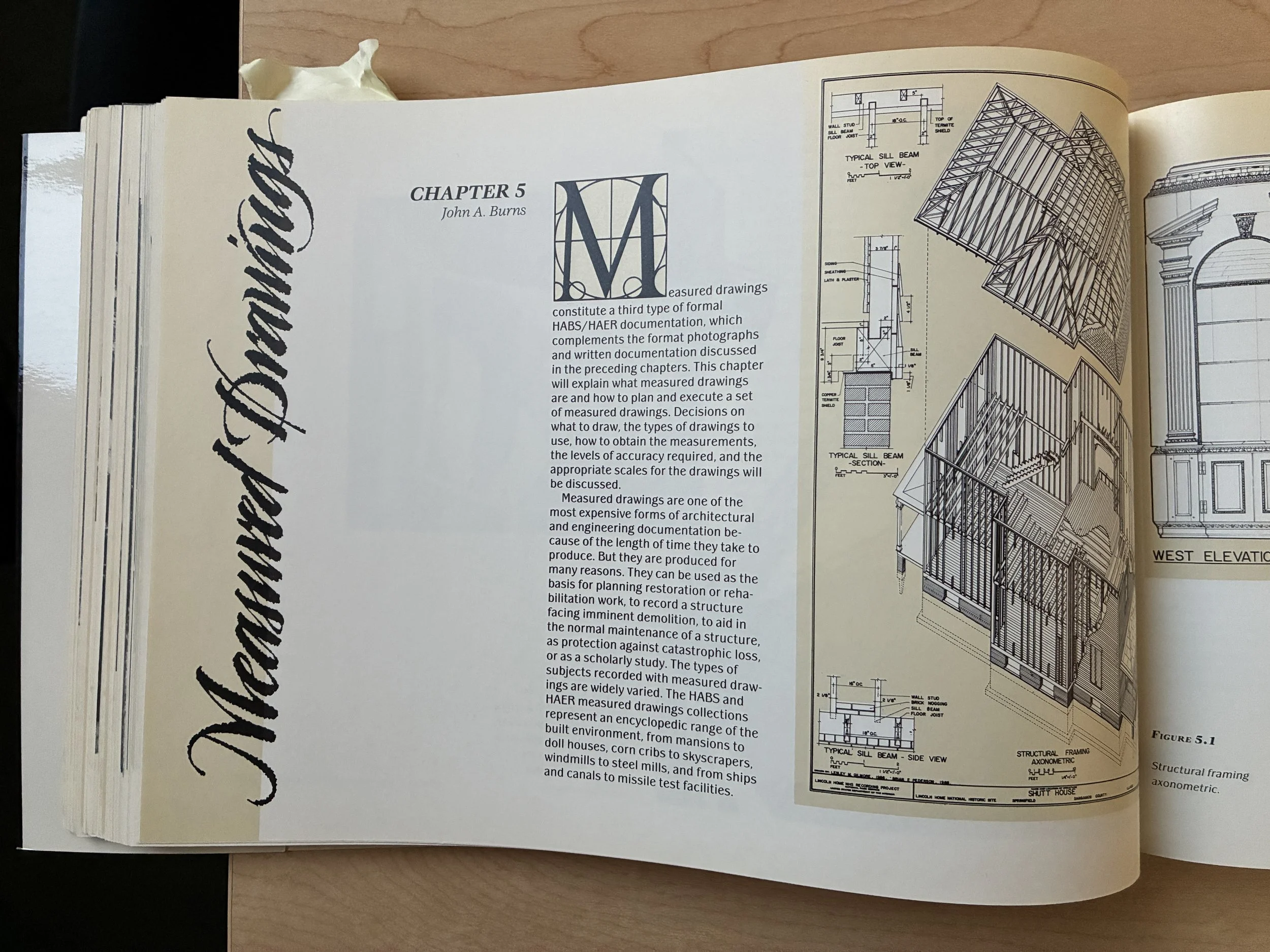
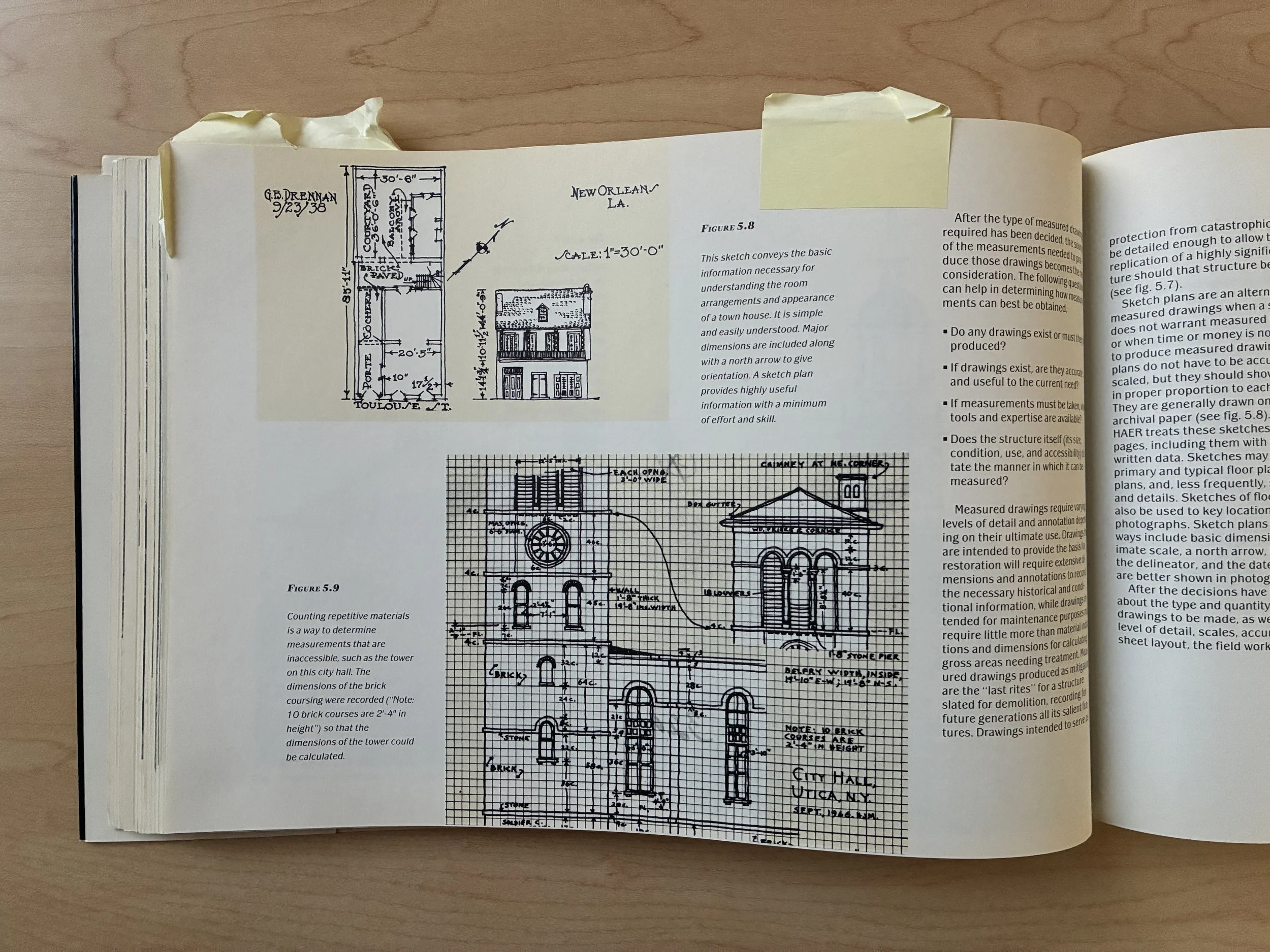
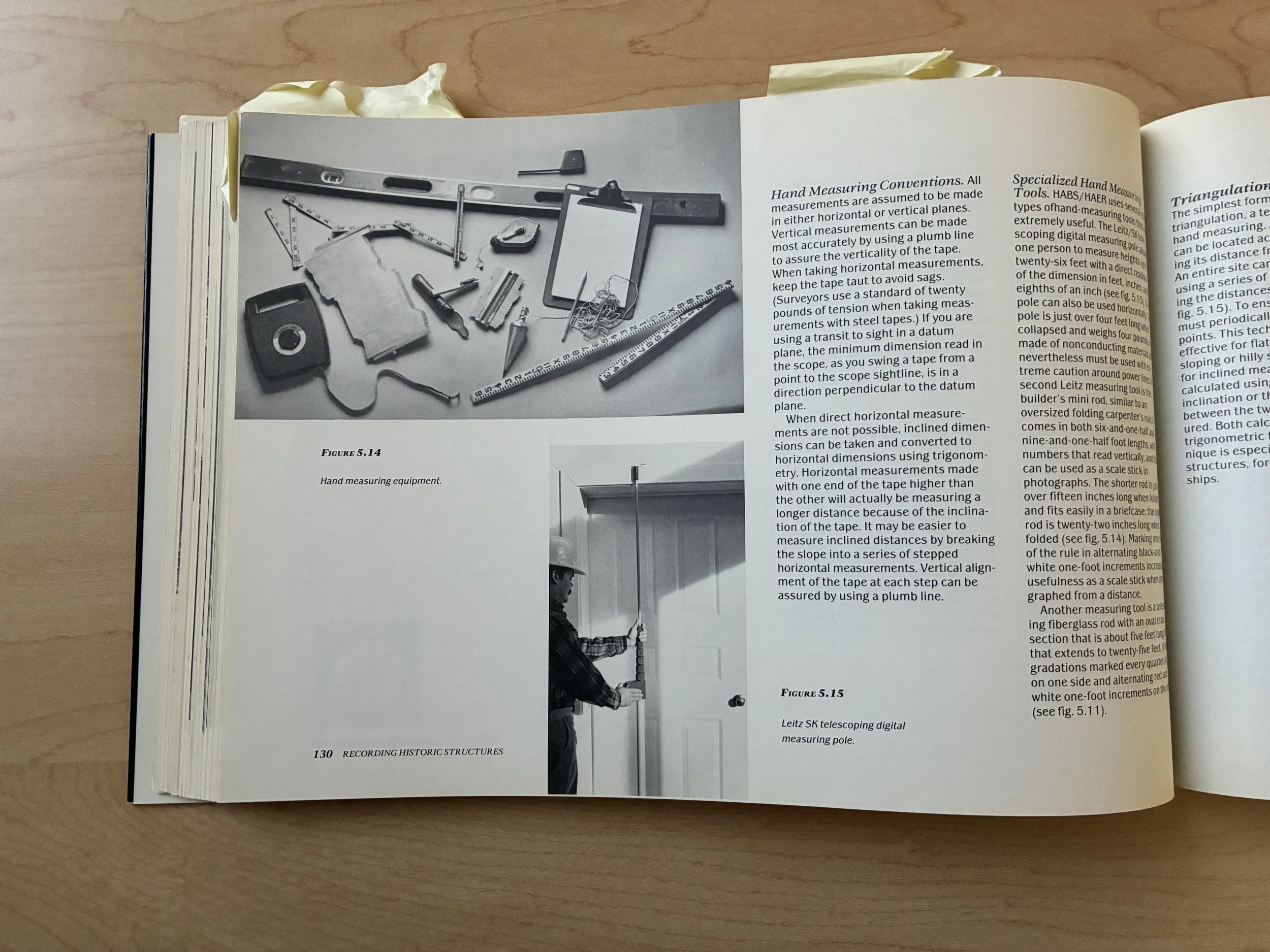
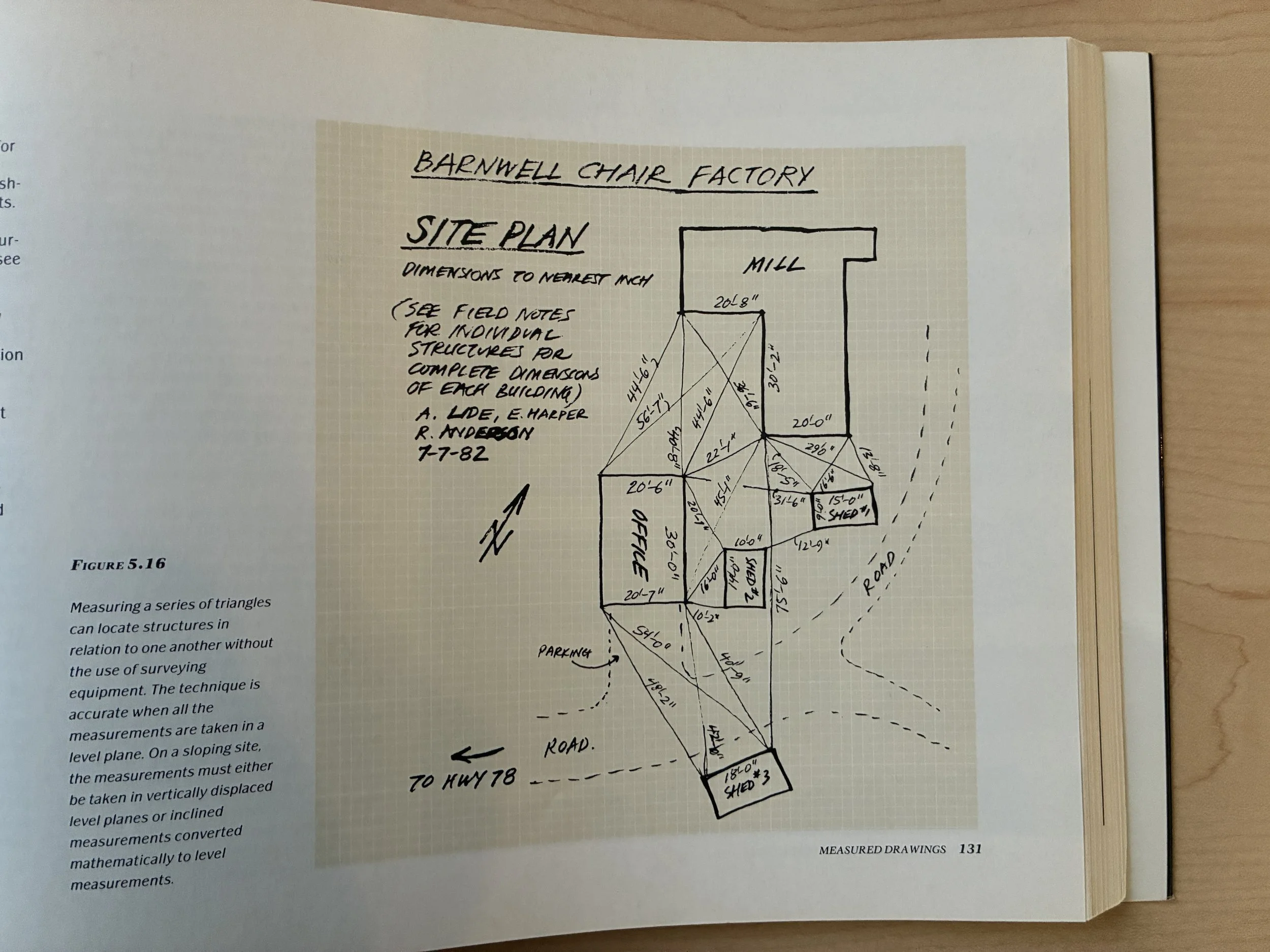
Of significant benefit for preservation architects are the recommendations when field-measuring historic structures. Simple procedures to improve accuracy and minimize errors can save the necessity for return site visits for additional verification.
In 1993, Charles E. Peterson sent a memorandum to his superiors at the National Park Services. His memorandum outlined a plan which led to the creation of the Historic American Building Survey, HABS as we know it today. In the memorandum Peterson states, “It is the responsibility of the American people that if the great number of our antique buildings must disappear through economic causes, they should not pass into unrecorded oblivion.”
In my opinion, Mr. Peterson was right. For our generation, the responsibility continues, and we owe it to history to record those buildings to the standards set by Mr. Peterson and all of those who followed in the HABS Division of the National Parks Service.
P.S. Please feel free to send me your comments on Recording Historic Structures, or other books you believe are essential for preservationist!
For additional guidance regarding recording historic structures, specifically using modern laser scanning technology, see the Heritage Documentation Programs.